
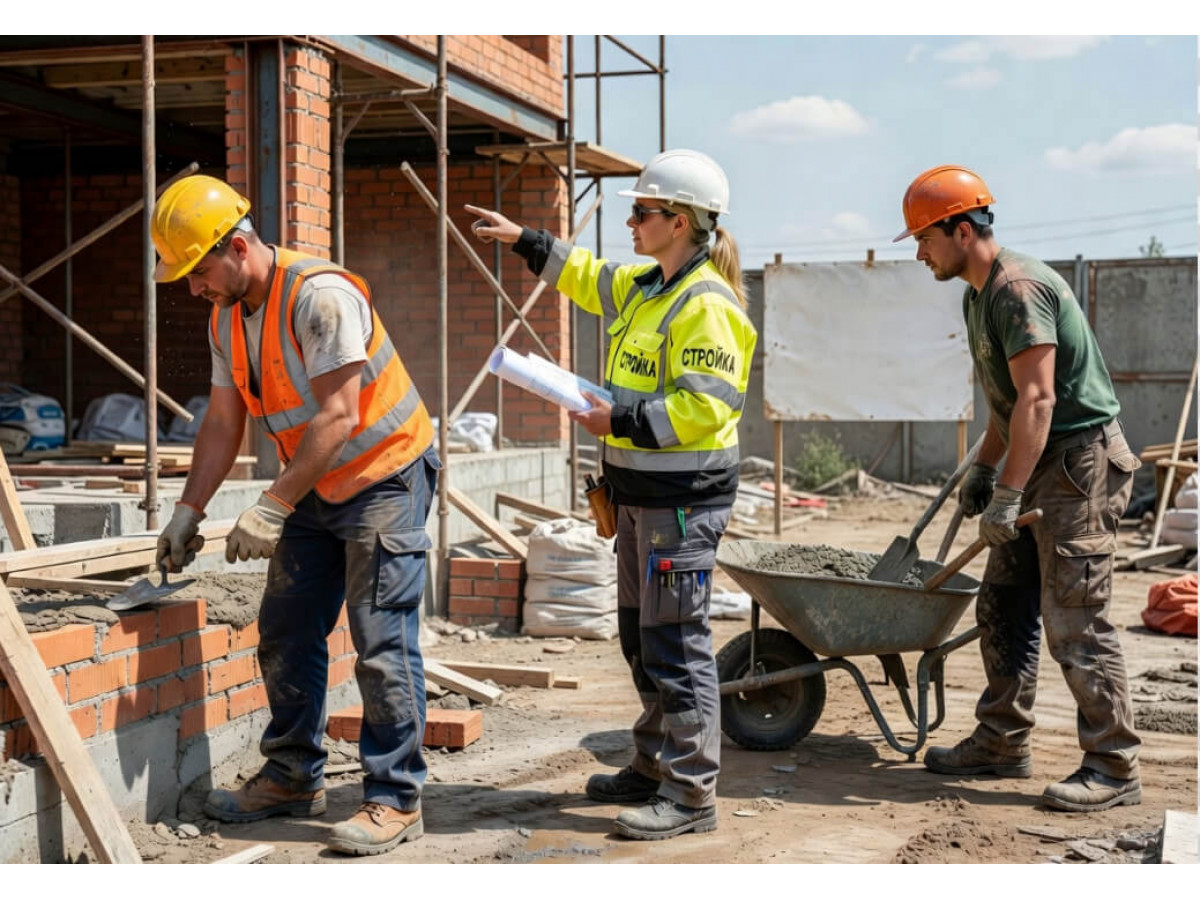
On a construction site, mistakes are costly - not only in terms of deadlines, but also in injuries, downtime and unnecessary replacement purchases. Therefore, the question of what work clothes are suitable for construction workers is not about appearance. It is about safety, freedom of movement, durability and whether a person can work a full shift without excessive fatigue.
In construction, clothing works with the worker. If the pants are torn at the knees, the jacket restricts movement or the fabric does not wick moisture, productivity drops. If the crew has to work outside, in the cold, rain or dust, the wrong choice of equipment quickly turns into a cost item. That is why the choice should be made according to the working conditions, not just the price tag.
What work clothes do construction workers need on a daily basis?
For most construction workers, a basic set starts with work trousers, a jacket or vest and a suitable underlayer. When working in sites with increased dirt, mechanical stress and frequent movement, the most important criteria are fabric density, seam quality and functional cut.
Construction work trousers must withstand regular friction, squatting, crawling, climbing and the weight of tools in the pockets. Therefore, models with reinforced knees, tool pockets and places for knee pads are a practical solution. If the crew is concrete, installing frames or working on finishing, the knee area wears out the fastest. Cheap trousers in this area usually do not last even a season.
The jacket, in turn, should adapt to the season and the specifics of the work. In colder weather, protection against wind and moisture is important, but in the case of indoor or intensive physical work, a jacket that is too warm will only get in the way. Therefore, in many objects, the layering principle works better - a functional underlayer, a durable outer layer and, if necessary, an insulated vest or jacket.
Overalls are still a good option for some professions, especially in dusty or dirty environments. However, they are not the most comfortable option for all crews. In assembly, roofing or facade work, a two-piece set is often more flexible, as it allows better adjustment of sizes and easier replacement of individual parts if they wear out faster.
Fabric and construction determine lifespan
When choosing what workwear for construction workers will be economically justified, you should look not only at the composition of the material, but also at the construction. Cotton is comfortable and breathable, but it dries more slowly when wet and does not always provide the best wear resistance during intensive work. Polyester and cotton blends are usually more practical, as they hold their shape better, dry faster and withstand frequent washing longer.
There is no one-size-fits-all solution here either. In the summer, too thick fabric becomes a burden, while in the winter, too thin clothing means discomfort and increased fatigue. If a company is purchasing clothing for its team, it makes sense to create at least two seasonal sets, rather than trying to make do with one model all year round.
Details that are often read too quickly in a catalog are also important. Triple seams, reinforcements in friction areas, high-quality zippers and secure closure solutions mean fewer replacements in the long run. If the uniform is purchased for several employees, these details directly affect the budget.
Visibility and safety on site
On a construction site, clothing should help people stand out, not hide them in the background. If the work is carried out in road construction, external engineering networks, logistics areas or facilities with the movement of machinery, high-visibility clothing is not a matter of choice. It is a safety tool.
Reflective stripes and bright colors should be present not only on the vest, but also on the jacket and trousers, depending on the job. A vest alone does not always solve the visibility requirements, especially in bad weather conditions or in the dark. If the crew works in mixed-type facilities, a modular approach is useful - everyday basic clothing with the option to supplement it with a certified high-visibility layer.
There is a significant trade-off here. The more protective features a garment has, the higher the price will usually be. However, it is not practical to overpay for specifications that are not used on site. Therefore, HSE managers and procurement specialists must align garment requirements with real job risks, not assumptions.
When extra protection is needed
Not all construction workers will be satisfied with standard workwear. If your team includes welders, metalworkers, or workers who work in environments with sparks, heat, or electrostatic hazards, fire-resistant and antistatic solutions are necessary. You don't have to buy such clothing for the entire crew, but it is mandatory for specific roles.
The same is true for protection from rain and cold. When working outdoors in the autumn and winter seasons, the waterproofness and insulation of clothing affect not only comfort but also work performance. A frozen worker becomes slower, less precise and more exposed to risk. Therefore, insulated jackets, water-repellent outer layers and suitable work trousers for wet conditions are not a luxury.
Comfort is not a bonus, but a working tool
Many buyers still evaluate workwear based on the principle that it should last. In construction, this is not enough. If clothing presses on the shoulders, drags along the length or restricts movement, a person gets tired faster and works less efficiently. This is especially noticeable in professions that often require overhead work, bending or moving materials.
The right size grid and consistent delivery are critical for companies that outfit teams. If the cut varies from batch to batch, it leads to dissatisfaction and additional administrative work. Therefore, a professional supplier must not only be able to sell clothes. They must be able to ensure stable quality, repeat orders and understandable size logic.
Practical details also improve comfort - ventilation zones, elastic inserts in moving areas, adjustable cuffs, a higher waist for back protection and pockets that really fit the workday. If pockets are placed awkwardly, they are ignored. If they are well thought out, the employee spends less time searching and moving around unnecessarily.
How to buy work clothes for your team without unnecessary losses
The biggest mistake for companies is usually not buying too expensive. The biggest mistake is buying cheap but inadequate. If the form has to be changed too often, the costs increase imperceptibly - with the addition of reorders, deliveries, accounting errors and employee complaints.
A practical approach is to evaluate clothing according to four parameters: work environment, protection requirements, intensity of use and replacement cycle. For example, lighter fabric and greater freedom of movement may be sufficient for interior decoration, while exterior assembly work requires more durable construction and visibility elements. If there are several professions in one company, it is often more appropriate to create different sets, rather than imposing one model on everyone.
The possibility of replenishment is also important. If the company grows or rotates personnel, the clothing must be able to be ordered again without long pauses and without fluctuations in quality. This is where the advantage lies with a supplier who controls production, adjusts models and can ensure serial repeatability. In this respect, Darteks is a practical partner for companies for whom not only the first delivery is important, but also a stable supply in the future.
The company's image in the facility is also part of the function
In construction, form is not a matter of fashion, but a uniform visual standard has a real effect. The client sees an organized team on the site, employees are easier to identify, and the company looks disciplined. If you add a logo, embroidery or a consistent color scheme, workwear also begins to fulfill a representational function.
This is especially important for general contractors, maintenance companies and crews that regularly work on client sites. At the same time, you should not sacrifice practicality for the sake of image. Good corporate clothing should first be safe and durable, and only then visually unified.
How to avoid typical selection mistakes
The most common mistake is to buy one solution for all seasons, all jobs, and all people. Construction doesn't work that way. The workplace, the intensity of movement, and the risks are all different.
Another common mistake is to ignore employee feedback. If the crew says the knee area wears out too quickly or the jacket is not breathable, that’s not a small thing. It’s information that helps you make your next purchase more accurately and cheaper in the long run.
The third mistake is to look only at the unit price. It is more correct to calculate the cost over the period of use. If a more expensive model lasts twice as long and interferes with work less, it is often a more profitable solution already in the first season.
In construction, workwear should not be a random choice. The more precisely it matches the work environment and the team, the less unnecessary risks, interruptions and overpayments there are. If the form helps you work, not hinders you, it starts to bring returns every day on the site.