
If a seam breaks in the middle of a shift, a zipper gets stuck or a fabric fails to withstand a week of intense work, it’s not just an inconvenience. It’s downtime, risk and additional costs – both in terms of re-purchase and in terms of time spent troubleshooting at the site or factory. That’s why high-quality workwear is not a “more expensive option”. It’s a predictable performance that can be trusted to keep people safe and work moving.
This is a practical look at what quality really means in workwear - and how to buy or choose it in a way that helps meet requirements, not create new ones.
What does high-quality workwear mean in practice?
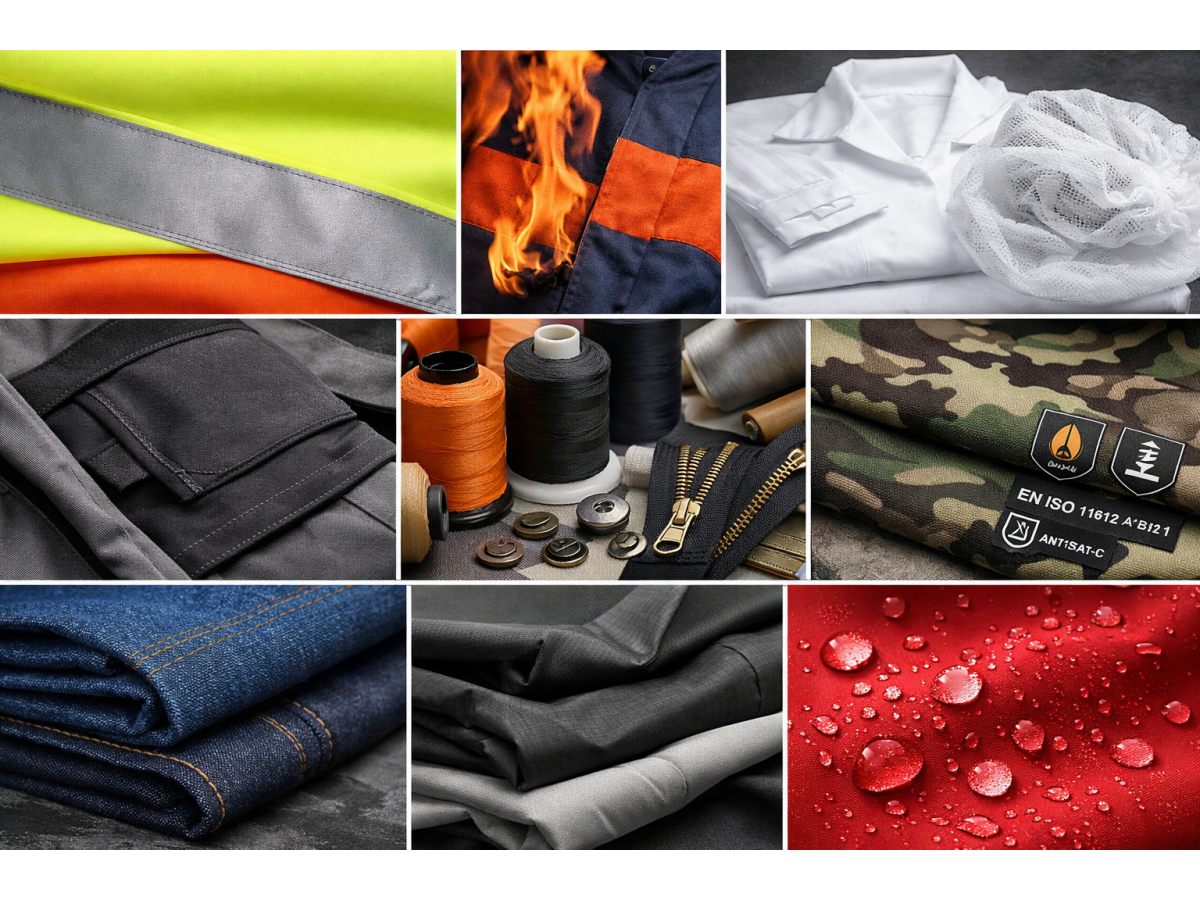
Quality in workwear is not one “super” detail. It is a system where material, cut, seam execution, fittings and compliance with a specific risk are combined. In one company it will be hi-vis and abrasion resistance, in another - HACCP hygiene , in a third - fire resistance and antistatic properties for welding.
A common mistake when shopping is to measure quality by the thickness of the fabric or the price. Thicker is not always more durable, and more expensive is not always more suitable. The practical definition is simple: clothing is designed to last longer, protect better, and be easier to maintain in the operating mode you actually have, not in theory.
Materials: How to understand what you're paying for
If your people work on their knees, rub against metal surfaces, lift heavy objects, or work outdoors, the choice of fabric determines how long the garment will retain its shape and protective properties. Cotton is generally comfortable and breathable, but can dry more slowly and wear out more quickly in certain jobs. Polyester and blended fabrics often hold their shape better and withstand washing, but in hot weather, it’s important that the cut and ventilation options compensate for the reduced air permeability.
Reinforcements are also an important signal of quality. Knee areas with reinforced fabric or pockets for knee pads, double fabric in areas of friction, and thoughtful inserts for movement - this usually pays off faster than "just thicker fabric everywhere."
Seams, fittings and “little things” that determine service life
There are no small things in workwear. The type of seams, the quality of the thread, the bartaki (reinforced seams at stress points), the durability of zippers and buttons - this is what breaks first if the quality is not sufficient.
It makes sense to look at the load areas: pocket corners, belt loops, bottom of the zipper, shoulder seams, beam part. If there is reinforcement in these areas, the clothing usually lasts longer even with intensive daily use. On the other hand, if the company has many washing cycles (e.g. food production, medicine, HoReCa), the fittings must withstand both temperature and chemistry.
Compliance with risks and requirements: not only for “safety”, but also legally
Quality is not complete if the clothing does not match the working environment. Procurement documents often include requirements that are checked on site - hi-vis class, risk of flame exposure, electrostatic discharge, hygiene regime.
High visibility clothing (hi-vis)
In logistics, road works and areas with transport, visibility is a direct safety factor. Here, quality means that the reflective tapes remain effective after washing and wear, the color does not fade, and the cut does not restrict movement. If the vest is “formally” appropriate, but in reality flutters, sits on or gets in the way, people wear it reluctantly - and then the whole system does not work.
Welding, FR and antistatic
In metalworking and welding, the price of compromise is high. Fire-resistant and antistatic solutions must be chosen based on the real risk - sparks, heat exposure, the possibility of static discharge. Here, quality is not only about the material, but also about the construction: covered fasteners, pocket placement to reduce the risk of sparks, and thoughtful details that do not increase the risk of snagging.
HACCP, medicine, care and HoReCa
In the hygiene sector, quality means predictable cleanliness and easy control. Clothing must withstand frequent washing, be easily recognizable and standardized to reduce errors. Logistics are often also important here: so that sizes are stable and the same model can be quickly replenished, rather than “looking for a similar one” every season.
Comfort as an indicator of productivity, not a bonus
If the clothing pulls on the shoulders, presses on the knees or does not allow you to raise your arms freely, this directly affects the pace of work and the number of errors. A quality cut usually means that the reserves of movement are placed where they are needed: in the shoulders, elbows, knees and the radial part. In practice, this reduces both the risk of micro-injuries and fatigue at the end of the shift.
There’s also the “it depends” part. For outdoor work, wind protection and layering will sometimes be a priority, even if breathability suffers. Indoors, where people move around a lot, lighter fabrics and ventilation solutions often win out. High quality means you can choose a set that suits you, rather than trying to cover all situations with one universal model.
Procurement approach: how to choose the right one for your team
When dressing a team, it's not just one jacket or pants that are important, but the supply process. In practice, the following logic works: first define the working conditions (temperature, humidity, friction, flames, visibility, hygiene), then the roles (who needs what), and only then - the design and additions.
A quality supplier can offer a coordinated line of jackets, pants, and overalls that “work together” in terms of size, color, and function. This is especially important if you have turnover, new employees, and need to replenish inventory without chaos.
If you also need a corporate identity, logo printing or embroidery should be planned as part of the garment's life cycle. An incorrectly selected print can start to peel after washing, and it looks worse than no logo. On the other hand, high-quality embroidery or a correctly selected appliqué maintains a professional image in the long term without additional effort.
A simple criterion for purchasing: if continuous supply and uniform standards are important to you, choose a supplier who has production and quality control, and not just “sells what is in stock”. In such a model, it is also easier to ensure serial replenishment. This is exactly the full-cycle approach provided by Darteks.eu , where workwear is designed and manufactured with the ability to customize patterns, choose fabrics and maintain a uniform corporate style.
Maintenance and washing: where quality is tested fastest
Many garments look good on the first day. The question is how they will perform after 20, 50 or 80 washes. If the industry requires frequent washing, choose garments with stable color and fittings that will not fade over time. For hi-vis garments, it is especially important to maintain the effectiveness of reflective elements.
This is also a cost control tool: if you know the expected service life and maintenance requirements, you can plan replacement and replenishment without rushing. Rushing usually costs more - both in price and in errors with dimensions and fit.
Price vs. Cost: How to Justify “Quality” in Numbers
An operationally-minded manager must translate “quality” into measurable benefits. The easiest way is to look at the cost per working day, not the purchase price. If cheaper clothing has to be changed twice as often, it usually loses not only in material but also in time: coordination, delivery, size changes, downtime.
There are also reputational costs. A uniform, organized form with a clear identity in customer facilities and public places works as a signal of reliability. This is especially noticeable in service, logistics, HoReCa and construction, where the team is visible on a daily basis.
How to make a decision when working conditions are different
If a company has a warehouse, field teams, and production shop, a single solution may not be effective. In such cases, a base collection with clear additions works better: the same visual style and logo, but different levels of protection and seasonal layers. This allows you to maintain image and control without forcing people to wear inappropriate clothing.
If you only need to take one step in the right direction right now, choose one job or one risk area and get it right: suitable trousers with reinforcements, appropriate visibility or hygiene form, plus the ability to quickly add sizes. When the system works in one stage, it is easy to scale it up - and then high-quality workwear becomes the everyday standard, not a one-off project.