
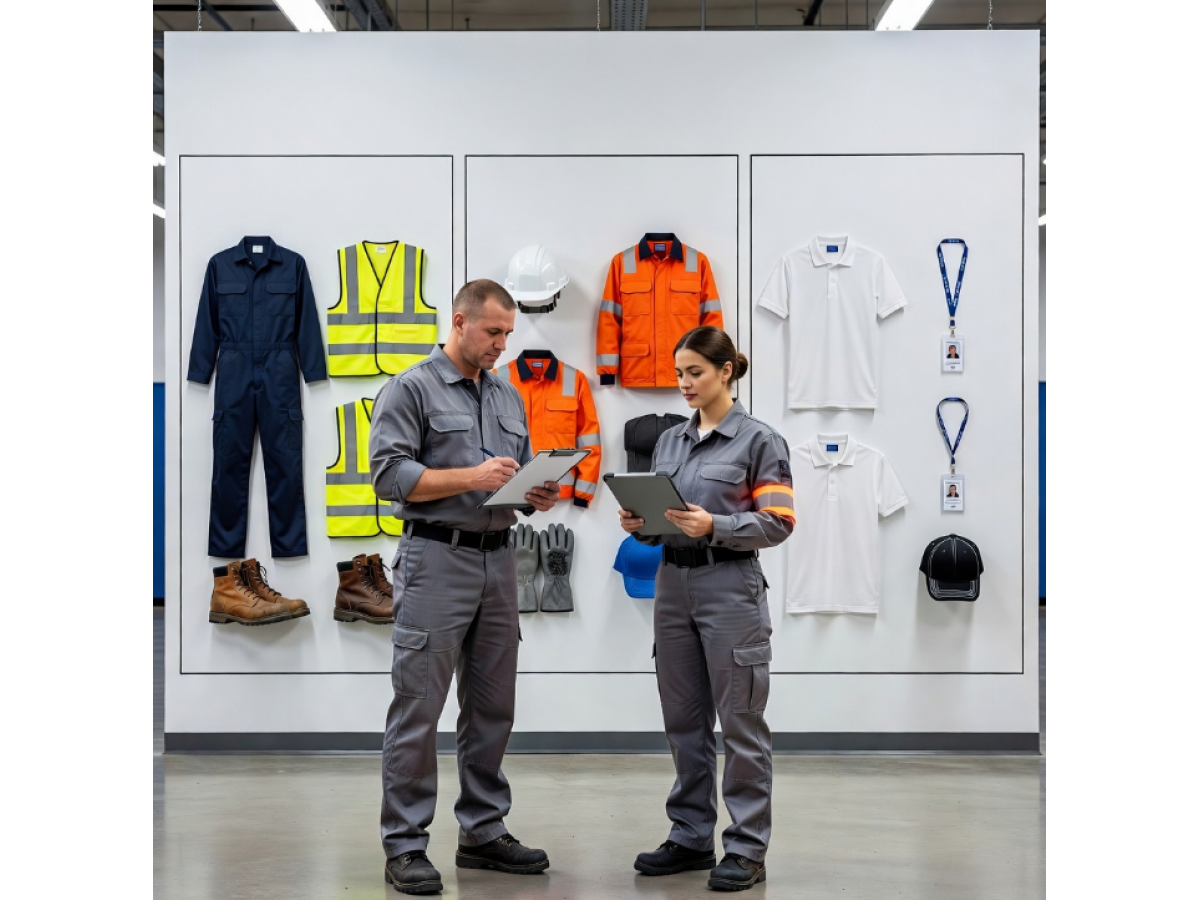
In procurement, mistakes in workwear are usually not visible on the first day. They appear later - when a jacket restricts movement, trousers wear out faster than expected, or on site it turns out that the chosen model does not correspond to the specific risk. That is why this guide to workwear standards is not just about theory. It is a practical framework for making the right decisions about protection, comfort, company image and budget.
Why workwear standards aren't just a formality
Workwear in a company serves several functions at once. It protects the employee, helps to comply with industry requirements, facilitates daily work and maintains a uniform professional visual image. If the choice is based only on price, the result is often more expensive than the initial savings - more frequent replacement, dissatisfied employees, greater risk of injury or non-compliance.
That is why standards are important. They help to understand what level of performance clothing should meet in a particular environment. In one company, durable everyday workwear is sufficient, in another, high visibility, flame retardant materials, anti-static properties or HACCP-compliant clothing are required. A standard is not a marketing tag. It is a reference point against which to judge whether a product is suitable for real-world working conditions.
The guide to workwear standards starts with a risk assessment
Before looking at the catalog, you need to answer a simple question - what should the clothing be protected against? If this step is skipped, even a wide assortment will not help.
In construction and logistics, visibility, wear resistance and weather resistance are often critical. In metalworking and welding, protection against heat, sparks and electrostatic discharge is a priority. In food production and HoReCa environments, hygiene, ease of care and compliance with internal quality procedures must be considered. In medicine and care, freedom of movement, easy washing and a presentable appearance during long shifts are essential.
A good purchasing decision is usually based on four questions. What are the risks in the work environment? How long will the clothing be worn per shift? How often will it be washed or professionally treated? And whether a uniform corporate identity with a logo, colors, and stable repeatability of supply is required.
The most important standards that buyers should know
Not every buyer needs to know all the technical codes by heart, but they should be able to recognize the main categories. This allows you to select suitable models faster and avoid inaccurate orders.
High visibility clothing
If the work takes place in traffic, in warehouses with machinery, on the road or in poor visibility conditions, high-visibility clothing is not a matter of choice. Here, not only the bright fabric is important, but also the placement, area and durability of the reflective elements after washing. It is necessary to assess whether the worker is visible from different angles and in different weather conditions.
Flame retardant and antistatic clothing
Specialized clothing is required for welding, working with electrical hazards, or in environments where sparks are likely. Thick fabric alone is not enough. The material and construction must be designed for the specific risk, including seams, closures, and layering options. Some companies also require antistatic protection, especially in production and certain technological areas.
Protection against weather conditions and mechanical stress
When working outdoors, it is not only heat retention that is important. Breathability, moisture wicking, and fabric durability in the knee, elbow, and pocket areas are just as important. If the clothing is too heavy, the worker will tire faster. If it is too light, the service life will suffer. Here, you should always seek a balance between comfort and operational reserve.
Hygienic clothing
In food production, kitchens and certain healthcare environments, clothing has a different logic. There, easy maintenance, minimal risk of contamination, a suitable cut and material that can withstand frequent washing are important. If the company has HACCP procedures, workwear should be aligned with this system, not exist separately from it.
How to read labels and technical information
The standard specification itself does not guarantee that the model will fit your team. You need to look deeper. First, what is the intended use of the product. Second, what are the material properties in practice - density, composition, wear resistance, stretchability, washing regime. Third, is there a stable size range and repeat delivery?
Buyers often compare only the price per unit. This is an incomplete measure. You need to compare price against lifespan, frequency of repairs or replacements, staffing, and compliance risk. Two visually similar models can have very different costs over a six- or twelve-month period.
Comfort is a matter of productivity
An employee will not wear clothing correctly just because it has been issued. If the jacket is too hot, if the pants are tight when squatting, or if the fabric is obstructing movement, the person will look for solutions on their own - they will unbutton, unbutton, change into unsuitable clothing, or simply work slower. From a safety perspective, this is a bad scenario.
Therefore, ergonomics should always be included in the evaluation of workwear standards. Elastic zones, correct placement of pockets, reinforcements in stressed areas and fabric weight are no less important than the name of the certificate. The standard sets the minimum. Comfort determines whether the clothing will actually work for the company.
When a unified corporate solution is needed
In many companies, workwear also serves a representational function. In a warehouse, production facility, customer facility or service, an employee's appearance influences trust. Here, not only compliance with the standard becomes important, but also visual consistency - colors, cut, logo placement and the ability to accurately repeat the order in the future.
This is where it is often not the cheapest supplier that wins, but the one who can provide the model in the long term. If the outfit is in one tone today, but three months later the addition is different, the professional impression is lost. For companies with multiple teams or regular staff rotation, this is a crucial issue.
A guide to workwear standards for different industries
In construction and infrastructure work, requirements for visibility, weather protection and durability are usually dominant. A layered approach works well here - base layer, mid layer and top layer depending on the season.
In manufacturing, precise division of the work environment is important. Not all employees need the same level of protection, so a single order for all personnel is not always the most effective solution. Sometimes separate lines are needed for operators, warehouse workers and maintenance specialists.
In welding and metalworking companies, a mistake in the choice is costly. There, not only the basic risk must be taken into account, but also whether employees work sitting, standing, in confined spaces or outdoors. For one job, flame resistance will be more important, for another - freedom of movement combined with protection.
In food production and HoReCa environments, the emphasis is on cleanliness, ease of care and process discipline. Here, work clothes must not interfere with hygiene procedures. In healthcare, comfort during long shifts and a professional appearance that inspires confidence in the patient are at the forefront.
The most common mistakes when purchasing workwear
The first mistake is to order by job title, not by actual working conditions. A “fitter” works indoors in one company, and outdoors in the wind and rain in another. The second mistake is to choose one model for everyone to simplify the purchase. This looks convenient on paper, but causes problems in everyday life.
The third mistake is ignoring the washing and care regime. If the clothing loses its properties after improper care, the paper match no longer gives anything. The fourth mistake is a disorganized size matrix. If there is a lack of consistency in sizes, staff supplies are drawn down, the volume of returns increases and control over costs is lost.
How to make a safe and economically sound choice
The right approach is to start with risk mapping, then select the appropriate clothing categories, test the models in practice, and only then close the full supply cycle. If the company has several departments, the testing should be sufficiently representative. Otherwise, it may happen that the model is suitable for the warehouse, but not for the crew outside or the welding station.
It is valuable to work with a supplier that can provide not only a one-off batch, but also customization, logo application, size discipline and restocking. In this regard, Darteks is a practical choice for companies that need not only a product, but also a stable supply process with quality control and understandable conditions.
If workwear is viewed as a cost item, the benefits will always be limited. If it is viewed as a tool for safety, productivity and company image, decisions become more accurate - and the budget works smarter too. Start with the requirements, not the discount, and the right standard will find its place much faster.